Average response time: under 24 hours
Apply densifier after the coarse metal bond grinding (around 50-100# equivalent surface) and before the fine resin steps. Let it cure fully before polishing. Densifying too early seals in contaminants; densifying too late means the fine grits polish a soft, porous surface that will not shine.
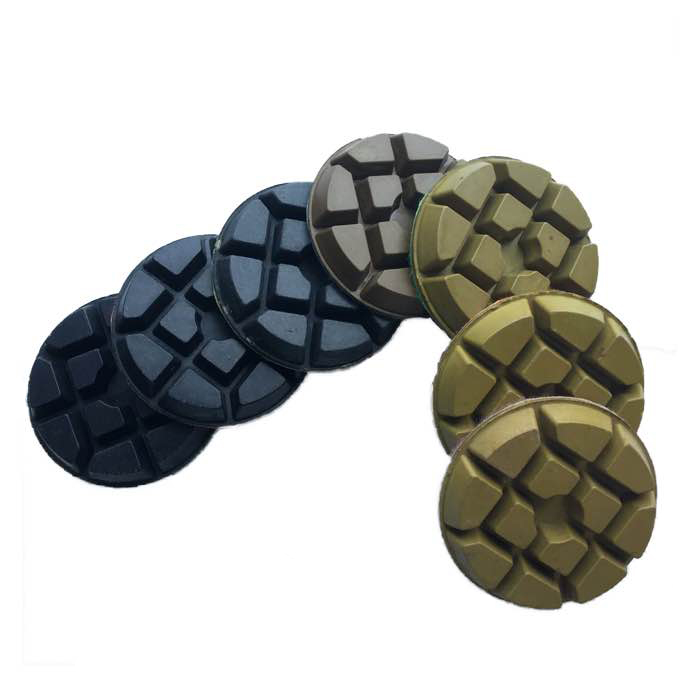
For machine-matched tooling, browse our Diamond Resin Polishing Pads for Concrete & Terrazzo... range.The densifier reacts with free lime in the concrete to harden the paste. If the surface is still dirty or coated, the reaction cannot reach the lime. If you wait until the floor is already polished, the fine grits have cut a smooth skin that the densifier cannot penetrate deeply.
Most lithium densifiers need 1-4 hours to react; some systems recommend overnight. Follow the label. Polishing before cure locks in soft pockets that appear as dull spots later.
A>Yes, a second light coat after the mid-polish steps is common on porous floors.
A>You can densify and burnish again; the gain is smaller but still real.
A>Lithium reacts faster and polishes brighter; sodium is cheaper and works on porous slabs.
Looking for the right tool? Check our Diamond Resin Floor Polishing Pads. Looking for the right tool? Check our 8 Triangles Diamond Resin Floor Polishing Pads.Densify between grinding and polishing, on a clean floor, and respect the cure time. It is the step that turns a hard floor into a glossy one.
Written and reviewed by JOY TECH - an SGS & BV audited, CE/RoHS certified diamond tools manufacturer founded in 2004, exporting to 50+ countries.
Our factory and quality management system are audited by SGS and Bureau Veritas. Products meet CE/RoHS requirements and every piece is 100% inspected before packing.
Verified Certificates
