Average response time: under 24 hours
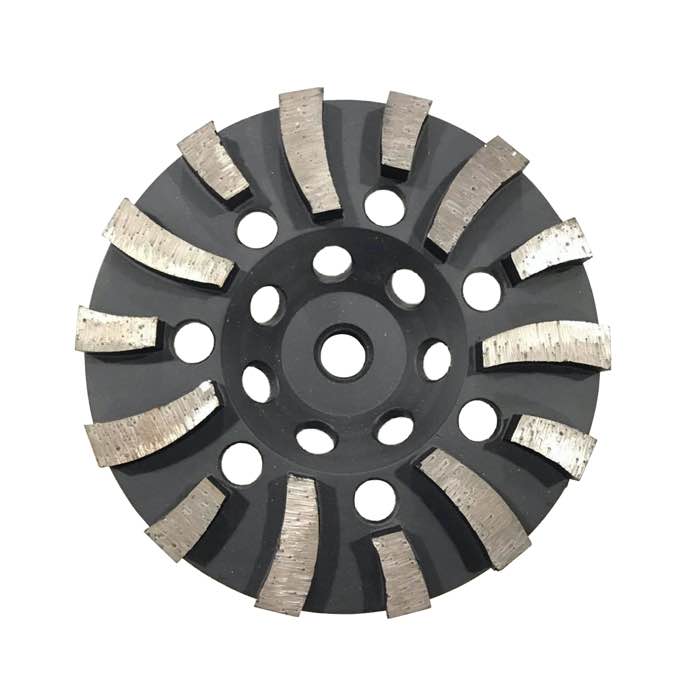
Grind the slab to a CSP 3-4 profile (open fine aggregate, no laitance) before pouring self-leveling underlayment. Use a 30/40 metal-bond trapezoid disc such as 4-segment metal bond discs on a planetary grinder, run a dust extraction vacuum, and open every pore so the underlayment bonds mechanically. Do not sweep and prime - you must remove the weak laitance layer; otherwise the self-leveler delaminates within a year. After grinding, vacuum, blow with compressed air, and apply the manufacturer-recommended primer within 24 hours.
The top 0.5-1 mm of a finished slab is laitance - a weak, cement-rich layer left by bleeding troweling. Self-leveling underlayment bonds to solid concrete, not to laitance. If you pour over laitance, the overlay floats on top and cracks, curls or delaminates along control joints within months. The International Concrete Repair Industry surface profile index calls for CSP 3-4 for cementitious overlays.
A 3-head planetary grinder in 270-800 mm width is the standard for underlayment prep. Single-disc grinders leave swirl patterns that telegraph through thin overlays. Use aggressive 16/20 or 30/40 metal bonds - you are profiling, not polishing. The goal is a consistent scratch pattern, not a flat finish. sintered-pad grinding discs cut fast on soft concrete where regular segments glaze.
| Underlayment thickness | CSP target | Starting grit |
|---|---|---|
| 3-6 mm (feather finish) | CSP 3 | 30/40 |
| 6-20 mm | CSP 3-4 | 16/20 or 30/40 |
| > 20 mm (repair bed) | CSP 4 | 16/20 |
Test the slab for moisture before you grind - a calcium chloride test or relative humidity probe. Self-leveler over a damp slab delaminates from the bottom. If RH is above 75%, use a moisture-tolerant underlayment and a vapor barrier primer. Grind last, then vacuum, then prime the same day. Do not let the ground slab sit more than 24 hours before priming - concrete re-dusts and re-carbonates the surface.
Walk-behind grinders miss 10-15 cm along walls and columns. Finish edges with an angle grinder fitted with a double-row cup wheel so the underlayment bonds all the way to the wall. Blow compressed air into control joints, then run a bead of backer rod and sealant at the walls to stop underlayment from leaking into the gap. Vents and drains must be masked.
A: Acid etching is no longer recommended for underlayment prep. It leaves soluble salts and an inconsistent profile. Diamond grinding gives a measurable CSP and is what overlay manufacturers warranty against.
Self-leveler will fill minor dips but cannot bridge 10 mm+ holes. Grind down high spots first, then pour. Thin underlayment only compensates for 3-5 mm of variation.
A: Yes. Loose dust on the slab prevents primer bonding. Hepa-extraction grinding leaves the surface clean enough to prime immediately; open grinding requires a broom, industrial vacuum, and a tack cloth.
Prime within 4 hours of grinding, then pour within the primer open time (usually 1-4 hours). Grinding and priming the same day is the safest schedule.
Self-leveling underlayment lives or dies by the grind. Remove laitance to CSP 3-4 with aggressive metal-bond trapezoid shoes, vacuum and prime the same day, and verify moisture before you pour. JOY TECH supplies the 16/20, 30/40 and sintered-pad discs used by overlay contractors on every major grinder platform; contact us for a bond recommendation matched to your concrete.
Written and reviewed by JOY TECH - an SGS & BV audited, CE/RoHS certified diamond tools manufacturer founded in 2004, exporting to 50+ countries.
Our factory and quality management system are audited by SGS and Bureau Veritas. Products meet CE/RoHS requirements and every piece is 100% inspected before packing.
Verified Certificates
