Average response time: under 24 hours
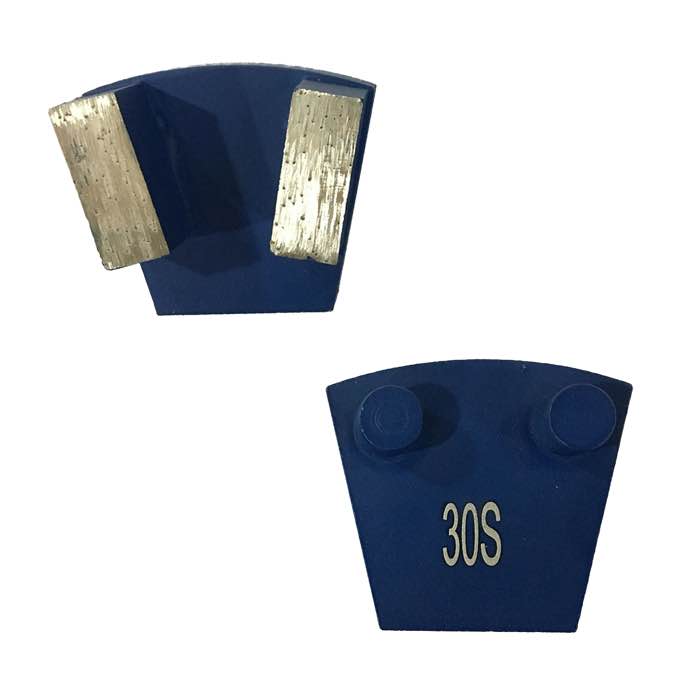
FF (Floor Flatness) and FL (Floor Levelness) measure how close a slab is to the intended plane using a dipstick profilograph. Standard industrial slab is FF 25 / FL 18; a distribution center with narrow-aisle reach trucks typically requires FF 40-50. Post-pour grinding with a ride-on planetary at 30/40 grit can raise FF by 5-15 points per pass, but only if the deviation is under ~3 mm in 3 meters. Beyond that, you need shot-blasting, grinding compound, or a self-leveling overlay.
ASTM E1155 defines both numbers:
Numbers are reported as the minimum 90th-percentile value across the bay. FF 25 means 90% of the floor meets a 3 mm-in-3 m tolerance.
| Class | FF | FL | Typical use |
|---|---|---|---|
| Conventional | FF 15-20 | FL 13-15 | Warehouse, parking, light traffic |
| Industrial | FF 25-35 | FL 18-25 | Distribution, fork truck traffic |
| Superflat | FF 45-60 | FL 35-45 | Narrow-aisle VNA, AS/RS |
| Ultraflat | FF 80+ | FL 60+ | AGV lanes, precision manufacturing |
Grinding removes high spots. It does not fill low spots, so it improves FF (which averages local waviness) much more than FL (which needs long-range levelness). A ride-on planetary at 800-1,000 mm width, running 30/40 grit metal-bond shoes, can take 0.3-0.8 mm off a high spot in a single pass. Repeated cross-passes at 90 deg normalize the plane.
Use bar-style segments such as double-bar WerkMaster segments for leveling - the long contact shoe dresses more floor per pass than a rounded segment and tracks straighter across high spots.
Run a ASTM E1155 profile survey before grinding and after each major grit stage. Most contractors see FF gain of 5-10 points after the 30/40 leveling pass, and another 3-5 points after the 80/100 smoothing pass. Track which bays still fail - those are candidates for self-leveling overlay.
A distribution-center slab poured to FF 25 often comes in at FF 20-22 in practice. To reach a spec'd FF 40, plan this sequence:
Total concrete removal: 0.5-1.0 mm. Do not exceed 1.5 mm - you will expose aggregate and compromise the wear surface.
For VNA (very narrow aisle) warehouses where the spec is FF 50+, ride-on 800 mm planetary machines running 30/40 bar segments are the only practical option. Single-disc machines cannot level a 20,000 m² slab in budget.
Handover without an E1155 report is an open invitation to a callback. Before grinding, run the profile survey and give the client a baseline. After leveling, run the same survey and deliver the post-grind numbers. Most flooring specifiers require both reports for VNA and AS/RS projects. Keep the raw dipstick data on file for at least 2 years - rack manufacturers may ask for it during installation.
Schedule FF testing on a dry slab, not immediately after cleaning. Surface moisture changes the profilometer reading slightly. Allow 24 hours after the final wet-mop.
For ride-on machines, run the leveling pass at 60-70% of max travel speed. Full speed leaves wavy tracks; slow, steady passes produce a flatter floor and you will not need a third correction pass.
Do not confuse FF/FL with surface smoothness. A floor can be perfectly flat but still need polishing to remove grind marks. FF measures plane deviation; polish measures surface gloss. They are separate specs and both must be met.
For VNA warehouses, the spec is often FF 50 minimum on 90% of the floor, with no single bay below FF 40. If a single bay fails, you can grind that bay alone - do not re-grind the whole floor. Isolate the failing bay with tape, level it, and re-survey. Most FF failures are localized to high spots near saw-cut joints or column pads.
Often yes, if deviations are under 2-3 mm. Budget 2-3 passes at 30/40 grit and plan for 0.5-1.0 mm total concrete removal. Document the gain with a post-grind E1155 report.
Resin polishing removes 0.05-0.2 mm total. It smooths surface waviness and can add 1-2 FF points, but it is not a leveling tool.
Grind the slab first, then saw control joints. Grinding over cured joints risks spalling the joint edges.
Use a self-leveling overlay (3-5 mm) or a grinding-compound product. Grinding alone will cost more in tool wear and time than an overlay.
Post-pour grinding is the fastest way to lift FF on industrial slabs, but only within a few millimeters of deviation. Measure first, choose bar-style metal-bond tooling, and re-survey after each grit stage. JOY TECH supplies leveling segments for ride-on and planetary machines; send us your pre-grind FF/FL numbers and target class for a tooling plan.
Written and reviewed by JOY TECH - an SGS & BV audited, CE/RoHS certified diamond tools manufacturer founded in 2004, exporting to 50+ countries.
Our factory and quality management system are audited by SGS and Bureau Veritas. Products meet CE/RoHS requirements and every piece is 100% inspected before packing.
Verified Certificates
