Average response time: under 24 hours
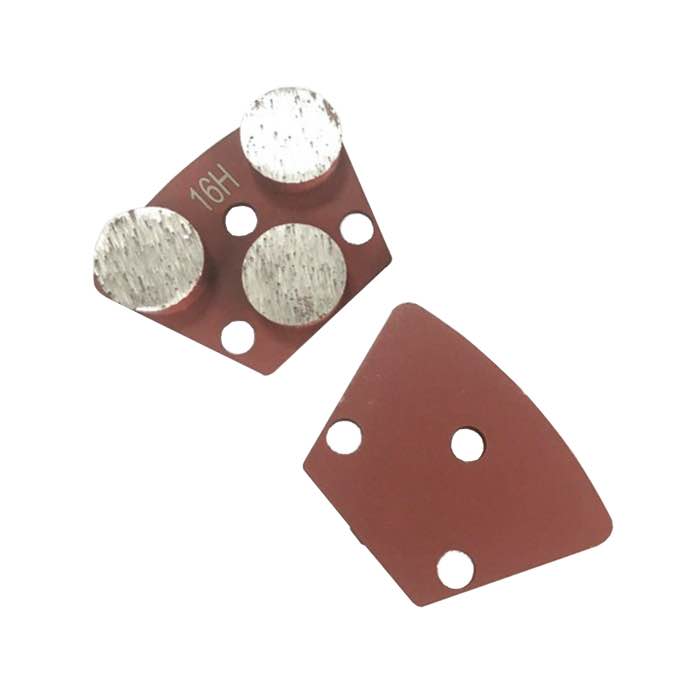
On hard concrete use a soft bond and slightly higher machine speed so diamonds stay sharp; on soft concrete use a hard bond and lower speed so diamonds are not knocked out too soon. Grit follows the stage of the job, not the hardness.
For machine-matched tooling, browse our 3'' Metal Bond Diamond Grinding Disc with 4 Segments range.Hard concrete responds to higher RPM with lighter pressure: let the diamond do the work. Soft concrete needs lower RPM and steady pressure so the tool cuts instead of skidding or chattering. Watch the machine for bounce - it is usually a hardness mismatch.
Grit is about the pass, not the slab. Start coarse (6#-16#) to cut, step through 30/40# and 60/80# to smooth, then 100/120# and finer before polishing. The bond stays matched to the concrete across all grits.
A>Yes, but you lose efficiency at both extremes - it is the safe default, not the fastest option.
A>Scratch test with a nail or use Mohs picks; or grind a test area and read the wear.
A>No, the bond matches the concrete either way.
Looking for the right tool? Check our 3'' Metal Bond Diamond Grinding Disc with 10 Segments. Looking for the right tool? Check our 3'' Metal Bond Diamond Grinding Disc with 5 Segments.Bond for the slab, speed for the bond, grit for the stage. Adjusting all three together is what separates fast crews from crews that fight every floor.
Written and reviewed by JOY TECH - an SGS & BV audited, CE/RoHS certified diamond tools manufacturer founded in 2004, exporting to 50+ countries.
Our factory and quality management system are audited by SGS and Bureau Veritas. Products meet CE/RoHS requirements and every piece is 100% inspected before packing.
Verified Certificates
