Average response time: under 24 hours
Rake marks and rough surfaces come down to the same root causes: machine condition, tooling match and technique. Fix abrading marks on concrete by re-abrading the surface with progressively higher diamond grit stages in overlapping passes, then honing and burnishing until the scratch mark pattern disappears. Marks are almost always caused by skipping grit stages, pressing too hard, or running the head too fast — so correct the technique, not just the tool.
For machine-matched tooling, browse our 3'' Metal Bond Diamond Grinding Disc with 4 Segments range.A closer look at the details.
Swirl marks are the leftover scratch mark pattern from the previous abrading pass.
Getting this part right saves a full re-pass later.
What you should know before starting.
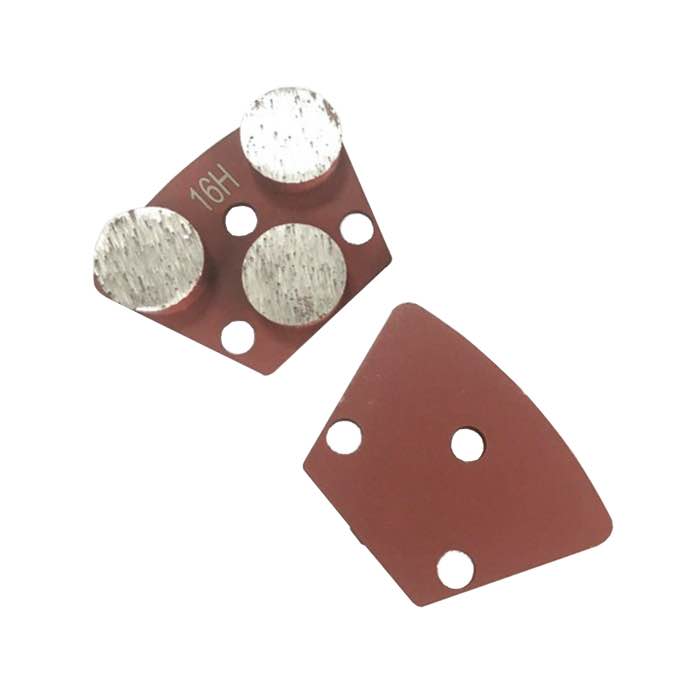
If the surface shows deep 30/40 marks, re-abrade at 30/40 with JOY trapezoid metal-bond discs until the deepest grooves are gone, then stage up 60/80, 120, and 220.
Contractors who skip this stage usually end up redoing the floor.
The key points in practice.
This is where most crews get it right - or lose time.
A closer look at the details.
Using PCD trapezoid discs at the start also helps level high spots before metal-bond abrading.
Getting this part right saves a full re-pass later.
What you should know before starting.
Contractors who skip this stage usually end up redoing the floor.
A: For most jobs, No. Start one or two grit stages below the deepest visible scratch mark, not necessarily from the first grit stage. Only deep gouges or lippage require coarse re-leveling.
A: In short, Burnish pads will burnish the top of the scratch mark but leave the valley visible under raking light. You must re-abrade deep enough that the scratch mark pattern is physically removed.
A: The practical answer is, Sealing layer and densifying sealing layer amplify light reflection at the surface. Tiny scratch marks that were invisible when dry become visible after coating layer, so the surface must be scratch mark-free before sealing.
A: For most jobs, Stop at 220-400 grit stage for an open, stain-ready profile. Burnishing above 400 closes the surface too much for some stains to penetrate evenly.
Looking for the right tool? Check our 3'' Metal Bond Diamond Grinding Disc with 10 Segments. Looking for the right tool? Check our 3'' Metal Bond Diamond Grinding Disc with 5 Segments.Match the tooling to the concrete, keep the machine in good condition, and run even passes - the finish follows. Abrading marks are fixable: re-abrade at the correct starting grit stage, control speed and pressure, work in overlapping cross-hatch passes, and finish with honing and burnishing.
Written and reviewed by JOY TECH - an SGS & BV audited, CE/RoHS certified diamond tools manufacturer founded in 2004, exporting to 50+ countries.
Our factory and quality management system are audited by SGS and Bureau Veritas. Products meet CE/RoHS requirements and every piece is 100% inspected before packing.
Verified Certificates
