Average response time: under 24 hours
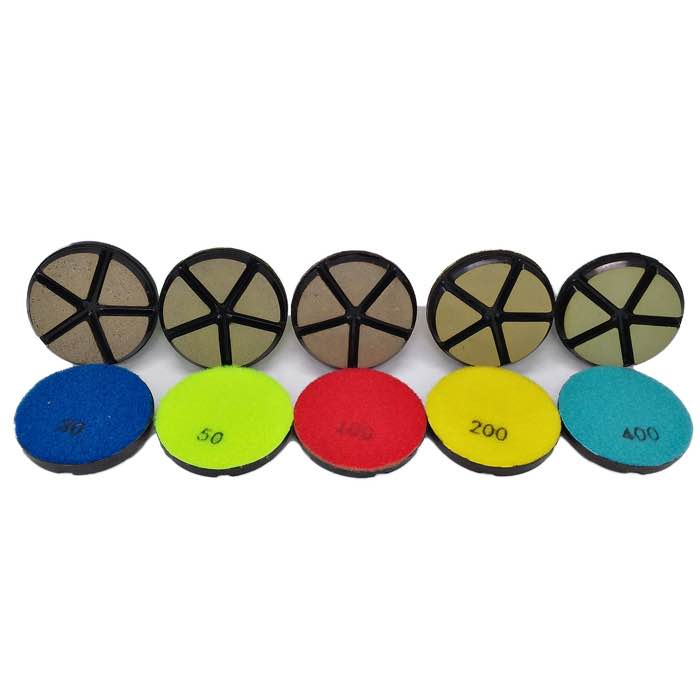
Most grinding failures trace back to a bond mismatch, worn tooling, or the way the grinder is being run. Fix deep metal-abrading scratch marks by re-abrading the area with fresh coarse metal (30–50 grit stage), then stepping through transitional pads and burnishing 100 → 400 → 800 → 1500 → 3000. Heavy scratch marks require full stripping first — burnishing alone only rounds their edges.
For machine-matched tooling, browse our 3'' Metal Bond Diamond Grinding Disc with 4 Segments range.The key points in practice.
This is where most crews get it right - or lose time.
A closer look at the details.
Getting this part right saves a full re-pass later.
What you should know before starting.
Contractors who skip this stage usually end up redoing the floor.
A: For most jobs, Worn segments, too much pressure, or skipping the transitional grit stages. Replace worn segments and stage through 50–100 before resin.
A: In short, No — deep scratch marks must be ground out. Burnish only removes the edges, making them wider and more visible.
A: The practical answer is, Extend each grit stage slightly beyond the previous one so the repair feathers into the surrounding surface.
Looking for the right tool? Check our 3'' Metal Bond Diamond Grinding Disc with 10 Segments. Looking for the right tool? Check our 3'' Metal Bond Diamond Grinding Disc with 5 Segments.Keep the sequence disciplined and the tooling sharp, and the surface will come out level and clean. Abrade them out, close the surface with transitional pads, and match the mirror finish with resin.
Written and reviewed by JOY TECH - an SGS & BV audited, CE/RoHS certified diamond tools manufacturer founded in 2004, exporting to 50+ countries.
Our factory and quality management system are audited by SGS and Bureau Veritas. Products meet CE/RoHS requirements and every piece is 100% inspected before packing.
Verified Certificates
