Average response time: under 24 hours
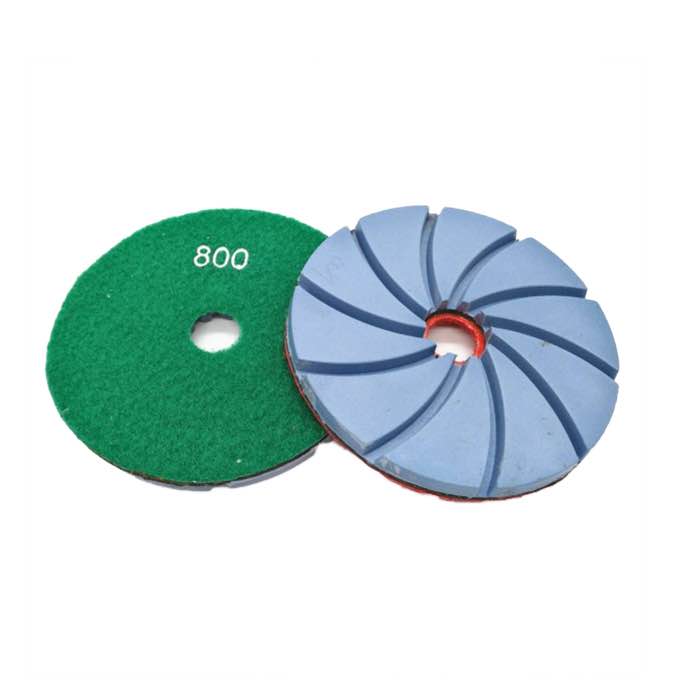
Yes, but only after you remove the sealer. Topical acrylic or epoxy sealers sit on the surface and block diamond pads from cutting concrete. Strip the sealer with a PCD disc such as 6-PCD cup wheel or a chemical stripper, then diamond-grind to open fresh concrete before running resin pads. Penetrating (impregnating) sealers do not need full removal - a light 100/200 grit grind opens the surface enough to re-polish. Never resin-polish directly over a topical sealer; the pads will glaze and the gloss will peel off within months.
Not all sealers are the same. The fix depends on which one is on the floor:
Test by rubbing a rag with acetone on an inconspicuous spot. If the rag picks up color, it is a topical film. If nothing comes off, it is penetrating.
PCD discs are the fastest way to strip sealer on walk-behind grinders. Run the PCD dry with extraction, moving slowly. Once the glossy film is gone, switch to a 30/40 metal-bond disc to clean the residue, then continue through 60/80 and the resin sequence. Chemical strippers work for edge areas the walk-behind cannot reach.
| Sealer type | Removal method | Then grind |
|---|---|---|
| Acrylic | Solvent or light PCD | 100/200 metal |
| Epoxy < 5 mil | PCD trapezoid | 30/40 metal |
| Epoxy > 5 mil | PCD + heat | 16/20 metal |
| Penetrating | None needed | 100/200 to open |
Once the sealer is stripped, the floor grinds like raw concrete. Run 30/40, 60/80, 150 metal, then ceramic transitional, then resin 50-3000. Densify after 150 metal so the fresh concrete absorbs the densifier. A standard resin polishing pad set finishes the job. If you skip densifier, the re-polished floor will not hold gloss as long as the original.
For small edge areas where PCD cannot reach, a dry polishing sponge pad on an angle grinder softens residual sealer before the walk-behind gets there.
A: You can burnish, but the sealer will still scratch and wear. True polished concrete requires grinding through the sealer to the concrete itself.
The floor turns uniform matte gray with no gloss, and a wet rag does not bead up. If water beads, sealer remains.
Yes, if the dye was in the sealer. If the dye was a concrete dye (penetrating), it stays. Plan to re-dye after grinding.
Densified polished concrete does not need a topical sealer. The densifier itself is the sealer - it hardens and dust-proofs the surface.
Polishing an already-sealed floor means identifying the sealer, stripping topical films with PCD, and grinding fresh concrete. Penetrating sealers need only a light re-grind. JOY TECH stocks PCD stripping discs and the full resin pad sequence for re-polishing jobs; tell us what is on the floor for the right removal kit.
Written and reviewed by JOY TECH - an SGS & BV audited, CE/RoHS certified diamond tools manufacturer founded in 2004, exporting to 50+ countries.
Our factory and quality management system are audited by SGS and Bureau Veritas. Products meet CE/RoHS requirements and every piece is 100% inspected before packing.
Verified Certificates
