Average response time: under 24 hours
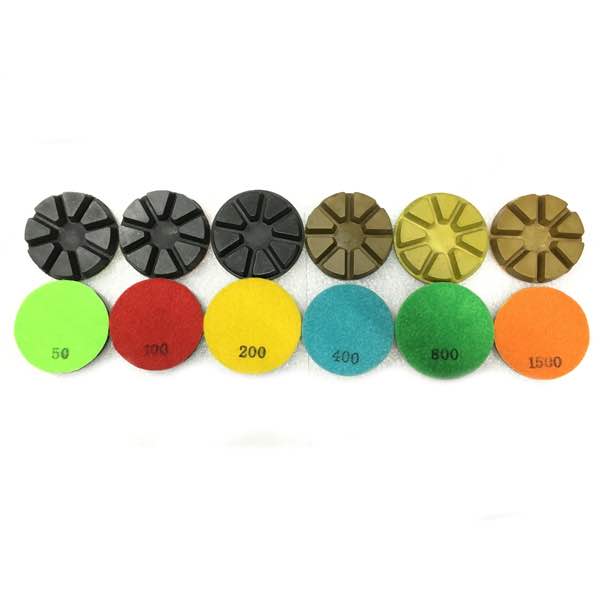
Polish up to 20-30 mm from a saw-cut control joint using the main grinder, then finish the last strip with a hand-held edge grinder using the same grit sequence. Joints themselves are left open in most commercial polished floors (they relieve cracking stress) or filled with a two-part epoxy semi-rigid filler for forklift traffic. Never grind across a control joint with a heavy ride-on - you will spall the edge. Plan 2-3 extra hours per bay for joint-edge work.
They are not the same thing:
Polishing treats them differently: control joints are often filled; expansion joints are never filled solid.
| Stage | Main grinder | Edge grinder (hand) |
|---|---|---|
| Metal-bond 30/40 | Pass to within 30 mm of joint | 125mm cup wheel, same grit |
| Metal-bond 80/100 | Pass to within 20 mm | 125mm cup wheel, same grit |
| Resin 400 / 800 / 1500 | Pass to within 15-20 mm | Hand-held resin pad (3 inch) |
| Resin 3000 / burnish | Pass to within 10-15 mm | Hand-held 3 inch resin / wool |
A control joint is a saw-cut edge, not a finished edge. Running a heavy grinder across it causes:
Feather the last 30 mm with a hand grinder at every grit stage. Do not try to fix it at the resin stage - scratches from missed edge work will show through.
Hand-held edge polishing never matches a planetary floor grinder exactly. The edge strip looks duller under raking light. Fix it:
Older floors often have joint-edge spalling. Grind out the damaged concrete 50 mm each side, pack with epoxy mortar, feather with a resin polishing pad, and continue the sequence. Plan the repair before the final 3000 grit - touching up after burnish is almost impossible to hide.
| Filler type | Shore hardness | Use case | Polish over? |
|---|---|---|---|
| Two-part epoxy (rigid) | D 80+ | Light foot traffic | Yes |
| Semi-rigid epoxy urethane | D 70-80 | Warehouse, forklift | Yes |
| Polyurethane caulk | A 20-40 | Expansion joints, exterior | No |
| Silicone | A 10-25 | Isolation joints | No |
Semi-rigid fillers flex with slab movement without cracking. Rigid epoxy cracks within a year on active joints - the slab moves, the epoxy does not, and it pops out. For high-traffic warehouses, always spec semi-rigid.
Fill joints after the final 800 grit resin, then polish over the filled joint at 1500 and 3000. This way the filler and concrete share the same final gloss level.
Polished joints need annual inspection. Vacuum out saw-cut joints every 6-12 months; debris in the joint prevents slab movement and causes random cracking. Inspect filled joints for edge separation - if the filler pulls away from the concrete, reseal the edge with a thin bead of semi-rigid caulk. On forklift traffic floors, inspect quarterly; forklift wheels chip filler edges.
Re-polish the joint edges every 2-3 years. The 3-inch edge pad wears down the joint strip slower than the main floor, so it stays shinier - re-burnishing both together keeps gloss consistent. Walk the floor at night with a flashlight to spot joint strips that are differing in gloss from the field.
Plan joint polishing time into the quote. Edge work runs at about 10-15% of the main floor rate per linear meter of joint. A 1,000 m² floor with 200 linear meters of joint needs an extra day. Skipping it shows up in the first walk-through.
Never run a grinder across an expansion joint. The head will drop into the full-depth gap, bounce, and spall both edges. Polish up to within 20 mm of the joint, then hand-finish the strip with an edge grinder.
Saw-cut first (24 hours after pour), then grind. Grinding over an existing joint risks spalling the edge.
Use 3-inch (75-100 mm) resin pads mounted to a hand-held backer. The same grits as the main floor, but smaller diameter. JOY RFP-05 pads fit standard edge grinders.
Standard saw-cut joints are 3-5 mm wide. Epoxy filler accepts that; wider joints (> 10 mm) need backer rod before filling.
Epoxy is darker than concrete. Tint the filler to match, or accept the joint as a design line. Most polished floors feature the joints deliberately.
Joints are not obstacles to polish around - they are part of the finish. Plan for edge grinding time, choose fill-or-leave based on traffic, and match grit through the hand sequence. JOY TECH supplies 3-inch resin edge pads and 8-triangle floor pads for a seamless transition; send us your joint layout for an edge-tooling kit.
Written and reviewed by JOY TECH - an SGS & BV audited, CE/RoHS certified diamond tools manufacturer founded in 2004, exporting to 50+ countries.
Our factory and quality management system are audited by SGS and Bureau Veritas. Products meet CE/RoHS requirements and every piece is 100% inspected before packing.
Verified Certificates
