Average response time: under 24 hours
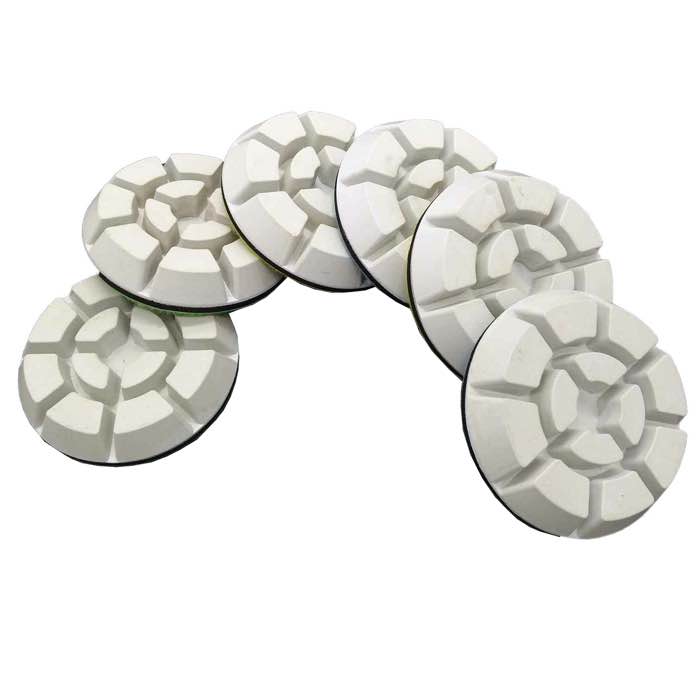
Dark concrete (black cement, dark grey aggregate, dyed floors) hides densifier haze but exposes every scratch and swirl mark from metal-bond grinding. Light concrete (white cement, light aggregate) shows white densifier bloom immediately but hides fine scratches. The grit sequence is the same 30-3000, but dark floors need an extra 100-to-200 resin transition and white resin pads to avoid dye transfer, while light floors need extra densifier-wiping to prevent white marks. Plan 20-30% more polishing passes on dark floors for a clean mirror.
Polished concrete defects are contrast phenomena. A scratch is a shallow groove that catches light differently. On a dark floor, the groove reflects more light than the surrounding paste and looks white. On a light floor, the same groove reflects less and looks grey. The result: dark floors read scratches instantly; light floors read densifier haze and ghosting instantly.
| Factor | Dark concrete | Light concrete |
|---|---|---|
| Scratch visibility | High - every metal scratch shows | Low - fine scratches hide |
| Densifier haze | Hidden until burnish | White bloom immediately |
| Extra grit passes | +1 at 100, 200 resin | Standard |
| Resin pad color | White pads preferred | Black or dark pads OK |
| Densifier wipe requirement | Medium | Strict - wipe in 15 min |
| Final gloss target | 2,000+ GU for mirror | 1,200-1,500 GU reads rich |
| Best application | Retail, residential, showrooms | Offices, warehouses, bright interiors |
Acid or water-based stains applied to concrete change its color but not its scratch behavior. Treat a dark-dyed floor as dark: extra resin transition, white pads, careful densifier. Treat a light-dyed floor as light. Dye always goes on after densifier and before the final resin sealer.
Dark polished floors are judged under raking light. At night, walk the floor with a handheld LED flashlight held at floor height, pointing across the surface. Any scratch, swirl, or missed pad step shows up as a bright white line. This is the only way to verify a dark floor before handover - overhead fluorescent light hides most defects.
Light floors are inspected from above, in daylight, looking for haze, densifier bloom, or ghosting from densifier that was not wiped. The two inspection methods are not interchangeable; what looks clean in overhead light on a dark floor can look terrible in raking light.
Budget 1-2 extra hours per 500 m² for dark-floor inspection and touch-up. The extra time is the difference between a 5-star handover and a callback.
Resin pads are dyed black, red, green, or white by grit, not by preference. On dark paste, black or red pads can leave a faint grey stain at 400/800 grit that shows up under raking light. White pads are neutral and do not transfer. The standard rule: from 400 grit onward on dark floors, use white resin pads. On light floors, any color is fine because the stain does not show.
Keep pad batches separate. A 1500 pad that was used on a red 800 floor still has red resin embedded in the segments. Reuse it on a dark floor and you will see faint red swirls. Track pad color by grit stage, not by job.
For retail floors viewed at night under spotlights, plan one extra burnish pass at 2,000 RPM after handover. It evens the gloss and removes micro-swirls that only show up in the customer's lighting.
For dyed floors, test the dye on a hidden patch first. The dye penetrates differently in dark vs light paste, and the final color can surprise you. A dye that looks right on white cement can look muddy on black.
Pads at 400 and 800 leave a micro-scratch pattern. On dark paste it shows as a swirl under overhead light. Solve by adding a 200 resin step and using fresh pads at each grit.
They work but may leave grey residue on white cement paste. Use white pads for the final 1500/3000 stages to be safe.
No - densifier rate depends on porosity, not color. But dark floors hide under-application until the floor looks dusty months later. Apply the manufacturer's rate exactly.
Burn with a 400 resin pad and water, dry, then continue. Deep bloom needs re-grinding to 200 metal-bond. Prevention is wiping on time.
Color is not cosmetic - it changes defect visibility and therefore the workflow. Plan extra resin passes on dark floors, strict densifier wiping on light floors, and use white pads for the final stages on any dark job. JOY TECH's white and standard resin pad lines are matched to both workflows; send us your aggregate color for a pad-color recommendation.
Written and reviewed by JOY TECH - an SGS & BV audited, CE/RoHS certified diamond tools manufacturer founded in 2004, exporting to 50+ countries.
Our factory and quality management system are audited by SGS and Bureau Veritas. Products meet CE/RoHS requirements and every piece is 100% inspected before packing.
Verified Certificates
