Average response time: under 24 hours
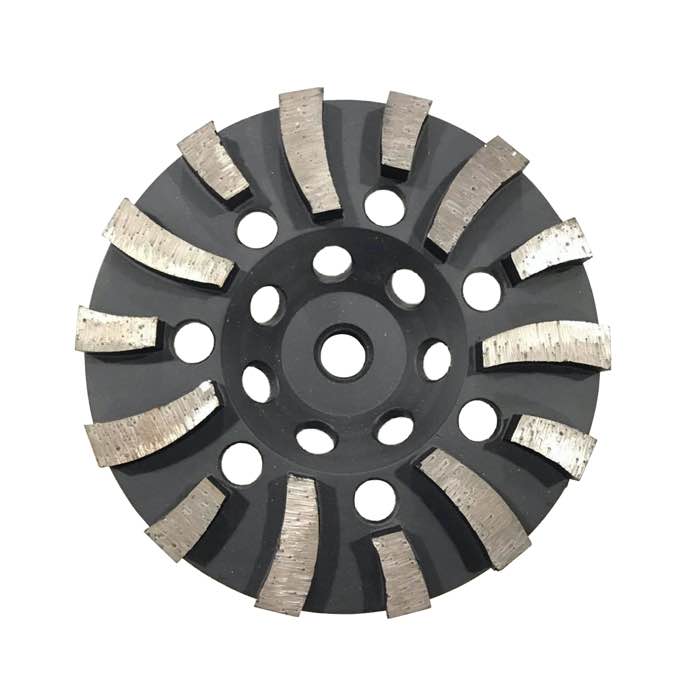
Spalling repair starts by grinding out every delaminated and loose concrete layer until you hit solid substrate, then patching with a polymer-modified repair mortar and re-grinding flush. Use a PCD or coarse metal-bond disc such as PCD-plus-bar trapezoid disc to feather the edges of the spall, then switch to a 30/40 metal shoe to blend the patch. Never grind a spall flat and leave it - the porous pocket will absorb water and delaminate further within a freeze-thaw cycle.
Spalling is the flaking and popping-out of the concrete surface layer, usually from freeze-thaw, rebar corrosion, de-icing salts, or a weak trowel finish. The top 2-10 mm is loose; tapping with a hammer gives a hollow sound. On polished floors, spalling shows as pits and patches where the aggregate has popped out.
Map every delaminated area with a hammer tap test. Grind out the loose layer until the surface rings solid. Bevel the edges at 45 degrees over 20-30 mm so the patch has a mechanical key. Vacuum aggressively, blow compressed air, and apply a bonding agent. Pack repair mortar in layers if the hole is deeper than 20 mm. Cure for 24 hours, then diamond-grind flush.
| Spall depth | Repair product | Cure before grind |
|---|---|---|
| 1-5 mm | Cementitious skim coat | 12 hours |
| 5-25 mm | Polymer-modified repair mortar | 24 hours |
| > 25 mm | Epoxy mortar | 48 hours |
Grinding out delaminated concrete is aggressive work. A 6-PCD cup wheel on an angle grinder removes loose paste fast and bevels edges without pulling out sound aggregate. For large spalled areas on a walk-behind grinder, switch to a PCD trapezoid disc. Once the patch is cured, use a 30/40 metal-bond trapezoid shoe to grind it flush, then continue through 60/80 and the resin sequence to blend.
For spalling caused by old epoxy lifting, a 12-small-PCD cup wheel strips both the coating and the loose paste in one pass before patching.
A: Only if the spall is shallower than 2 mm and the concrete below is sound. Deeper spalls leave pits that collect water and delaminate further.
Cementitious mortars need 24 hours; epoxy mortars 48 hours. Grinding too early pulls the patch out.
If you grind it flush and run the same resin sequence across patch and host, yes. The densifier step is what makes the gloss match - densify both together.
Often yes - weak surface paste, bad curing, or over-troweling. If spalling is widespread across a floor, grinding alone will not fix it; consider an overlay instead.
Spalling is a delamination problem, not a surface problem - grind out the loose layer, patch with the right repair mortar, and re-grind flush. PCD tooling removes the bad layer fast; metal-bond shoes blend the patch. JOY TECH stocks PCD cup wheels and trapezoid discs for every grinder brand; send us a photo of the spalled area for a recommended repair kit.
Written and reviewed by JOY TECH - an SGS & BV audited, CE/RoHS certified diamond tools manufacturer founded in 2004, exporting to 50+ countries.
Our factory and quality management system are audited by SGS and Bureau Veritas. Products meet CE/RoHS requirements and every piece is 100% inspected before packing.
Verified Certificates
